Sunday, 15 September 2019

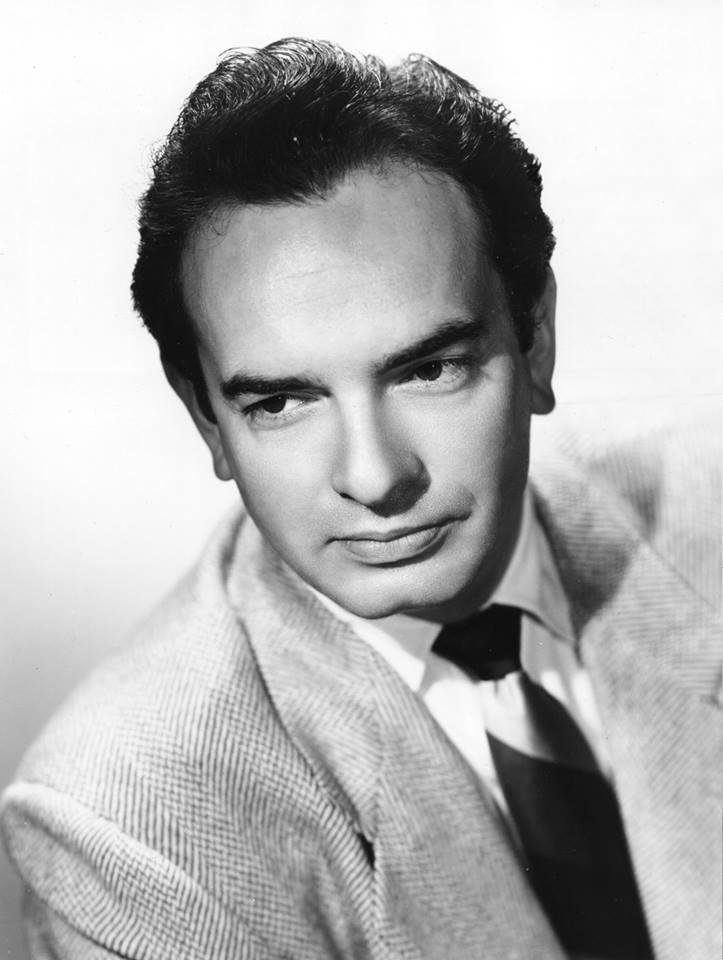
The Towel and Billboard Lady, Phyllis Newman

Game shows in the 1960s had a number of guest panelists who popped by on occasion, and audiences likely weren’t aware of the range of their talents because they appeared elsewhere than on television.

Phyllis Newman was one.

She did the Goodson-Todman shows out of New York—“What’s My Line?”, “To Tell The Truth,” “Match Game” (the original version), as well as “Password.” But her real fame came from the stage, where she had a very long career. Newman was nominated for a Tony at one point, and appeared in a well-received one-woman show, “The Madwoman of Central Park West.”

Let’s go back to her Tony-nominated role in this syndicated newspaper feature story from February 18, 1962.

Toweled Phyllis Newman, ‘Subways’ Show Stopper
By WARD MOREHOUSE
North American Newspaper Alliance
NEW YORK—Phyllis Newman doesn't wear silk or satins or feathers or furs in "Subways Are for Sleeping." She wears a towel—a plain blue terry cloth towel that must have cost all of $2.98—and she's the hit of the show. Socko, as Variety would say.
Phyllis is extremely fetching in a towel, but it takes more than that to stop a show, as she does in the musical play at the St. James. She also is an adroit comedienne, and in the role of a "Miss Mississippi" runner-up, she's fairly irresistible.
"Is there any possibility that the towel will slip?" I asked as a matter of academic interest.
She said: "No, it's attached to a bra, so there's no danger of that. I have two towels, but I've never worn the other one because I'm superstitious about it. I stick to the towel I was wearing the first time we stopped the show in Philadelphia. They keep it washed for me."
• • •
IN "SUBWAYS," Phyllis plays a po’ little Southern girl with show-business aspirations, holed up in a room at the Brunswick Arms Hotel in New York. She owes the hotel $1,100. And she figures, with deadly feminine logic, that the management would be embarrassed to haul her screaming to the street in a towel, so she never wears anything else.
“I’ve tried to copy the accent of a friend of mine, Boaty Boatright, who was born in the South," she said. “Through Boaty I’ve met some other Southern girls and they all have such lovely manners.
"Where was I born? In Jersey City, the home of gracious living."
Phyllis, a bright and lively brunette (she wears a blond wig in "Subways") is married to Adolph Green, who with Betty Comden wrote the book and lyrics for "Subways" and other Broadway successes.
• • •
“THERE was a lot of opposition to my appearing in the show,” she said. “I had to do a number of auditions for David Merrick (the producer), Michael Kidd (director), Julie Styne (composer) and Betty. Adolph stayed away from them. I’m not sure that I'd want to do another show that's connected with Adolph because it's hard on him.
"He and Betty worked so hard on the road. They were writing all night until 6 in the morning then they'd sleep about four hours and start again. Their first script was much better than the one we have now...but we're selling out and people are liking it. It’s getting an excellent reaction.”
Phyllis met Adolph Green when she auditioned for "Bells Are Ringing." another Comden & Green musical. She was signed as standby for Judy Holliday.
"A few weeks later Adolph asked me for a date, then he didn't ask me for another date for a long time," she recalled. "I knew Adolph was an intellectual and on that first date I tried to impress him by dropping the names of books and authors I hadn't even read. He's found me out since then, obviously."
They have a year-old son, Adam, and an apartment on Central Park West. Phyllis is not the housewife type. "I don't sew or tat or make things, and I can't cook at all. My husband deserves better than my cooking."
Phyllis appeared on television in "Diagnosis Unknown" in 1960 and in four other Broadway productions. But she never stopped a show before. "It's thrilling. Orson Bean is so much fun to work with, and Sydney Chaplin is terribly attractive to the ladies."


Newman worked with Orson Bean on “To Tell The Truth.” But she appeared on another TV show that many may not remember her on, the American version of “That Was the Week That Was.” This AP column was published January 10, 1965.

They're Banging on the Door of Phyllis the Satirist
EDITOR'S NOTE: Phyllis Newman thought she was just doing satires for her own amusement until she tried them on TW3. Now she's famous for them, though it's a weekly scramble involving idiot cards the size of billboards, and her success has brought offers from all sides.
By CYNTHIA LOWRY
Associated Press Writer
New York — Not long ago Phyllis Newman's four-year-old son, Adam, was asked in nursery school what his mother did—professionally speaking. The little boy replied: "She gets up and she sits down."
"Well, it was true," said the dark-haired young performer later. "The only time he'd seen me on television was in To Tell the Truth, and although I did some talking, the only movements I made were to stand up or sit down."
Miss Newman, while still collecting a healthy weekly check as a regular member of the day-time To Tell the Truth panel, currently is causing comment as a regular member of the troupe that each week cooks up some mischief in a TV revue—or, more precisely, review—called That Was the Week That Was Tuesdays at 9:30 p.m. on NBC.
"I was dying to get on the program," she recalled. "I'd known Leland Hayward (the producer) since I had a part in his 'Wish You Were Here.' And my husband and I kept running into him at parties. Each tune he'd say something like, ‘We've got to have you on the show,’ but that was as far as it went."
• • •
FINALLY, however, she made it, and surprised a large number of viewers by launching into a wicked and extremely funny imitation of Barbra Streisand, complete in mannerism and voice. Since then she has gone to work with the same naughty efficiency on Audrey Hepburn, Ethel Merman and Linda Bird Johnson, a portrait gallery which suggests her range.
"The only one that made me a little bit nervous was Ethel Merman," she added. "Partly because I personally think she's so great, and partly because she's not easy to mimic."
Phyllis really was not surprised that the TW3 people were not exactly beating down the door to get her. "Nobody thought of me as a satirist," she said, "In fact, I never really thought of myself as anything more than a bathroom satirist — like a bathroom tenor, doing those things for my own personal fun. In fact, nobody in show business was doing much thinking about me at all — I've been mostly on a daytime TV show lately and not many show business people watch at that time."
She laughed.
"And now," she added, "nobody thinks of me as anything but a satirist."
• • •
SHE HAS BEEN MARRIED for almost five years to Adolph Green who, with his partner Betty Comden, has turned out a long string of Broadway hits. She met him when she was Judy Holiday's understudy in the Comden-Green "Bells Are Ringing." Later, she auditioned five times for a part in their "Subways Are for Sleeping," finally won it, and received a Tony Award as the best supporting actress of the season. But it was one of the loneliest times of her life—the rest of the cast eyed her nervously and from a distance, because the author was her husband.
During the period before the birth of her daughter, Amanda, last year, Phyllis decided that she "had the ideal job for a pregnant performer: The panel show.
"I stayed on the show until a couple of days before she was born," she recalled. "All it took was a couple of mornings a week, a few changes of blouses or tops—all that showed was the tops."
• • •
IN TERMS of hours spent, TW3 also makes modest demands—but the hours themselves are crowded and frantic.
The whole thing is all so very urgent," she said. "Right up to air time— we're live, you know — they keep making changes to keep up with the news."
For one show she had an hour in which to learn the notes of a song and get a little familiar with the words. She is extremely myopic and unable to wear contact lenses.
"So when I work I can't use an electric prompter or even ordinary-sized idiot cards," she said. "When they hold up cards for me to read, they are about the size of billboards."
Now that the night-time audiences have discovered Phyllis Newman, all sorts of opportunities are flowing her way.
"I get sent scripts. I've had series offers from California —and I've been offered so much money you wouldn't believe it to make commercials."
• • •
THE TELEVISION networks fret considerably about the audience ratings of its programs, and NBC is something of a brave trailblazer in putting on TW3 in prime evening time. They know full well that sharp wit, satire and kidding the most dignified, powerful figures in the world is not exactly everyman's idea of the perfect TV show — not when Westerns and comedies top the ratings.
"I think we should have small ratings." she said. "As long as NBC is happy, I think small ratings give us a kind of class."
There’s a tribute to Phyllis in this story at Broadway World.

Two Remleys, Part Two

Dennis Day had two shows. Phil Harris had two shows. That was a running gag on Jack Benny’s radio show. It was used as another put-down of Jack, who only had one show.

Someone else had two shows. Frank Remley.

This gets a little tricky, so bear with me. Remley was in Harris’ orchestra when it was hired to work on the Benny show in 1936. Over a number of years, Remley’s name was used whenever Benny’s writers needed a gag about someone more dissipated than Harris. When Harris was hired by F.W. Fitch to do a second show, hosting the Bandwagon in 1946, he needed a foil. Who better than Frank Remley? After all, there was instant name recognition from the Benny show. So now Remley was on the Benny show playing the guitar and on Harris’ show...well, kind of.

Movie fan magazines are not exactly noted for their veracity, but there’s no reason to disbelieve this story that Harris told Modern Screen in its June 1948 issue.
We had an awful time casting Frankie. Frank Remley is my oldest friend. We began in this business together, me a drummer and Frankie playin' guitar. When I got my own band, he came with me. We've played in every big and little place on the globe, lived together until we got married. I'm always kiddin' him about his age and all that.

Well now we were castin' for this part. Actors were readin' for us and we were turnin' 'em down right and left. Suddenly I say how wonderful if this guy were able to do it himself, after all he's a pretty amusing guy. So I call him up — he's got his own little combination by now and is playing around town. I don't tell what I want him for, just say, "Come over."

He brings his guitar of course. I hand him a script and tell him to read with me so the director and the rest can hear that he's an actor too. "Now Curly," he says, (he's the only one who calls me Curly) "I'm no professor." I tell him to shut up and start readin'. He keeps tryin' to tell me something but of course I won't let him. I got one thing on my mind. So we start and he goes like a wagon with a broken wheel. He's slow, his timing is impossible. I say, "Are you afraid, Frankie?"

"Look Curly, I've been trying to tell you something," he says, "it's something I've been meaning to tell you for several months. I got myself a pair of reading glasses, can't read without 'em now. I left 'em home today. I can't hardly see this paper I'm holding let alone the printing on it."

He'd been hiding this about the glasses because he knew I'd rib the brains out of him for growing old and all that. Well, before we got around to giving him another chance to read, a very good professional actor blew in, just out of the army and we gave him the job. And Remley works in the band, playin' the old guitar. He practically falls off his chair every week when he hears himself being impersonated.
Elliott Lewis was hired to portray Remley, so you now had the fake Remley on the air on the Harris show, and the real, guitarist-not-speaking-on-the-air version on the Benny show.

Through circumstances I’ve never understood, when Harris left the Benny show in 1952, his orchestra stayed with Benny; Walter Scharf continued to front a different band on the Harris show. That meant the real Remley was still plucking away with Benny. When that happened, the fake version played by Elliott Lewis on the Harris series unexpectedly changed his name to “Elliott Lewis” with an explanation that was more contrived than funny.

I’m glad you followed all that.

Remley (the real one) was lucky enough to get that far. Here’s a 1924 wire service story.
YOUTH IS KILLED AT MODESTO
By the Associated Press
MODESTO; Sept. 13.—Allen Young, 20, of Eagle Rock, Los Angeles county, was killed early this morning when as a member of a party of six musicians he was driving south towards Los Angeles. Their car tipped over directly across the Southern Pacific tracks at Hatch crossing, known as “death curve.” A Southern Pacific northbound train came along a few moments later and hit the wreck.
Young was taken aboard the train and died there in a few minutes. When the engine hit the car the gas tank exploded and the automobile was burned up. Other members of the party were Sloan Campbell, Berkeley; Frank Remley, Los Angeles; Rene Duplessis of Van Nuys; Gordon Glenn of Los Angeles, and Mark Murray of Long Beach. All are believed to be students at the University of Southern California.
Remley was a great travelling companion. Wire service stories reveal how Remley and Harris or Remley and Benny would hop in a car and go somewhere, including trips to British Columbia. Here’s an Associated Press story about an unusual cross-country auto journey. It’s from August 27, 1948.
Phil Harris at Fargo With Jack Benny's Car
FARGO—(AP)— Orchestra Leader Phil Harris and his guitar player, Frank Remley, were fishing near Detroit Lakes, Minn., Thursday. They arrived in Fargo Wednesday and went to Little Detroit Lake, where they are staying at the cottage of Mr. and Mrs. Clifford Paulsrud, Fargo.
Harris and Remley were driving an English car which Jack Benny bought on his trip to Europe this summer. Harris and his wife, Alice Faye, and Mr. and Mrs. Remley accompanied Benny on the trip.
“When we landed at New York, Benny intended to ship the car to California but Remley has told me so much about Fargo and the lake district that we sent our wives home by train and we're driving to Hollywood.”
Remley is a nephew of Nick Remley, fire chief at Moorhead, Minn
.
Frankie accompanied Benny in performances on the road, too. They appeared together at the 93rd California State Fair in Sacramento in 1952. They also went to Korea together during the War in a taxing tour of military camps.

Remley’s name and off-mike laughter remained on the Benny radio show until it signed off in 1955. Benny was busy with television at the time and the real Remley actually showed up on camera a few times and spoke. He was also conducting his own orchestra by the mid-50s; Benny once plugged it on radio and its club appearances were broadcast for a while late night on KABC radio.

The most print Remley got may have been when he passed away on January 28, 1967. Newspapers all over North America picked up the story. There was a sad sidebar to it.
Frank Remley Dies at 65
NEWPORT BEACH, Calif. (AP) – Frank Remley, known to radio fans as the humorous drunk who traded quips with Jack Benny, is dead, a victim of heart failure.
The 65-year-old guitarist, a fixture on the comedian's shows of nearly 30 years, died Saturday of a cardiac arrest after open heart surgery.
His death came only a few months after the presumed death of his only child, Frank , Jr., 24, who disappeared with friend last Aug. 14 while sailing from Newport Beach to Portland, Ore. No trace of them was ever found.
Remley was born in Moorhead, Minn., on Oct. 23, 1901, grew up in Valley City and Fargo, N.D., and came to Hollywood in 1920.
He eventually joined the Phil Harris Orchestra and, in 1938 [sic], became a member of Jack Benny's group. He was a left-handed guitar player on the Benny show.
Survivors include his widow Helen; a brother Edward Kennelly; a sister Alice Schmallen; and his mother, Mrs. Nell Kennelly, all of Fargo.
Besides being travelling companions, Benny and Remley were great letter writers and exchanged correspondence, some of which would never be approved by radio censors. Benny wasn’t above using four-letter words off the air. Frank Remley seemed to enjoy life and have fun, and that sets a pretty good example for us all.

Saturday, 14 September 2019

The Other Guy at Terrytoons

To your right you see a lovely bit of incorrect information. Perhaps it’s understandable.

Felix the Cat was maybe the most famous cartoon character of the silent era. He was so popular imitation Felixes showed up at other studios. Walt Disney had Julius, while the Fables studio had Henry. Henry is the cat you see to your right with animator Frank Moser.

The Des Moines Register published the photo on March 31, 1928 along with the following blurb:
Frank Moser Sends Some Original Drawings for Exhibit.
From Des Moines hailed the father of Felix the Cat.
Felix is one of the most popular creations in comedy films today. And Felix is the brain child of Frank Moser, former Des Moines artist.
This afternoon just how Felix is managed on the celluloid will be explained by representatives of the Cumming School of Art. Mr. Moser has sent back original drawings of Felix and explanations of how Felix is given his lifelike qualities.
It takes 5,000 drawings of Felix to produce an ordinary comedy film.
Felix is the most important member of Mr. Moser's "Aesops Fables" films. But besides his animal cartoons, Mr. Moser does landscape painting and he has sent one dozen of these same paintings buck for the exhibit in the public library.
Frank Moser was an animation pioneer who was manoeuvered out of his share of the Terrytoons studio by Paul Terry in 1936. Terry went on to become a millionaire. Other than sit at home and paint, I don’t know what else Moser did until he died in 1964; the 1940 census states he was an animated cartoonist in the movie industry but doesn’t reveal for whom.

The local paper in Marysville, Kansas wrote about Moser a number of times after he had moved away to work in the animation industry in the silent era. The following is from April 10, 1952 and gives a nice biography, as well as a story about Walt Disney. I would guess Moser paid a visit on Bill Tytla and Art Babbitt; they may be the best-known former Terry artists at Disney (there were other New Yorkers there, such as Norm Ferguson).
Artist Re-Visits His Home
A visitor in Marysville this week was Frank Moser, artist and pioneer in the field of animated cartoons. A former resident and graduate of the high school here, Moser had not visited his home for 13 years.
He was born on a farm west of Oketo. His last visit home was in 1939. He has three brothers in Kansas. Brother Rudolph lives in Toneka. Fred is a resident of Blue Rapids and Charles Moser lives in Marysville.
Frank Moser's home has been in Hastings-on-Hudson, a suburb of New York City, for the past 40 years.
Moser graduated from Marysville high school in 1907. He was captain of the baseball team while in high school.
He recalls with considerable satisfaction that his squad defeated Frankfort twice.
He also played some football, but he adds, "not much."
After graduating from high school here, Moser went to study at the Albert Reed School of Art in Topeka. He later went to Des Moines, Iowa, where he attended the Cummings School of Art.
He went to work on The Des Moines Register and Leader, working with J. N. Darling, famous political cartoonist who always signed his works with the word "Ding" crawled across one corner.
Another Marysville man, Russell Cole, was also working in Des Moines at the time.
Russell moved on to a job in New York and Moser, after two years on the Des Moines paper, moved to New York.
He attended art school in New York and went to work on The New York Globe as cartoonist and illustrator. He worked on The Globe for about four years.
Moser is one of the pioneers in the field of animated cartoons in the motion pictures. During his career in the making of animated cartoons, he worked for Pathe, Paramount, Fox, International RKO, and several other motion picture studios.
Moser and Paul Terry established the cartoon known as Terry-Toons, now released by Fox, in 1929.
"We made it through the depression," Moser says. Together the partners made $18 in 1932.
Moser sold out to his partner in 1936. Today, he devotes his time to painting in oil colors and water colors. His wife is also a watercolor artist.
He is a member of the Salmagundi art club of New York, the American watercolor society, and the Hudson Valley art association.
Walt Disney is probably one of the best known producers of animated cartoons in Hollywood today. Moser's work preceded Disney's by 15 years.
"Disney was a natural theater man," Moser recalls, "and he was a natural gambler."
An incident told by Moser gives some illustration of Disney's character. In 1939, Moser made a trip to Hollywood, stopping in Marysville on the way.
In Hollywood, he met some of the men who were then working for Disney but who had formerly been employed by the Terry-Toon organization.
The Disney studio, they told Moser, appeared to be facing a financial crisis. They felt that Disney's free-spending production methods might force the company into bankruptcy.
In order to put a check-rein on Walt, they had to ask his brother, Roy, to take steps to halt the spending. Roy, in turn, went to the firm's banker (A. P. Giannini, Bank of America.)
Giannini called Walt Disney in to have a conference. Everyone expected the banker to give Disney a dressing-down.
"But to show you what kind fellow this Disney was," Moser says, "He went to see the banker and instead of a paddling, he came back with another million dollar loan."

Friday, 13 September 2019

Where'd That Come From?

Things happen in Tex Avery cartoons that defy explanation. It’s always best not to think about comedy that makes you smile or laugh and just enjoy it.

Here are a couple of examples from Tex Avery’s I'm Cold, a pretty funny Chilly Willy cartoon. The plot is simple. Chilly tries to steal furs to keep warm. A guard dog tries to stop him. In one scene, Chilly is inside a bear fur, toodling along toward the door.


The fur passes over the guard dog. The fur continues on its journey and reveals the dog has grabbed Chilly.


How can the fur move on its own? Because in a Tex Avery cartoon, anything can happen.

In another scene, the dog tosses a bundle of furs into storage, pulls a lock out of his mouth and locks the door.


How can a dog go around with a lock in its mouth? Because in a Tex Avery cartoon.... well, you know the rest. Tex liked surprise laughter and said he wanted to do something the audience would least expect. You wouldn’t expect a lock to be in a dog’s mouth, would you?

Both scenes are animated by Don Patterson. Ray Abrams and La Verne Harding also receive animation credits. Clarence Wheeler, who gets bashed in some circles, did a nice job with this short; Avery seems to have brought out the best in him.

Thursday, 12 September 2019

Popcorn Chicken

Tex Avery used exaggerated takes. Bob Clampett had animators who could stretch parts of characters in all kinds of ridiculous directions. Of course, this was in the late ‘30s and into the ‘40s.

Toward the middle 1930s, you wouldn’t find this very much in animated cartoons, certainly not at the Harman-Ising “We Wanna Be Disney” studio. In The Lost Chick (released in 1935), a pair of squirrels feed the little bird all they have in their home to eat—popcorn. The chick backs toward a fire with predicable results.

Here are some frames. The animation of the popcorn exploding inside the chick’s stomach is pretty tame and not all that funny.


The characters still look like something out of a Merrie Melodies cartoon a few years earlier; the designs would get more sophisticated by the end of the decade as Harman and Ising did their best to imitate Walt Disney’s shorts.

MGM pushed the Happy Harmonies cartoons in all the major film publications; to the right, you see a full-page ad. They generally got favourable reviews; the “Motion Picture Reviews” newsletter published by the Women’s University Club in Los Angeles called it “A delightful color cartoon.” One small town theatre manager wrote in the Motion Picture Herald “Every one of this series seems better than the previous one. They are bringing out some of the two and three-year-old kiddies and their parents. They are enjoyed as much as the feature.” Another said: “One of the best colored cartoons of the year. Give it preferred time.” Still another proclaimed it was “Delightful. In fact it's so good, I'm thinking of repeating it.” Another raved “You will not see a better all-color cartoon than this. I only wish they were all as good.”

The cartoon was one of the last in red-green Technicolor; the studio switched to full colour with The Old Plantation.

My thanks to Devon Baxter for the frame grabs.

Wednesday, 11 September 2019

Two Remleys, Part One

Elliott Lewis was one of those multi-hyphenates of radio. He acted, produced, directed, wrote and even created—“On Stage” with he and his first wife Cathy was one of his shows.

Lewis was an excellent dramatic actor, appearing on “Suspense, “The Whistler” and “Escape.” But he’ll probably be associated with Phil Harris in his long-running role as Frank Remley, first on “The Fitch Bandwagon” and then on “The Phil Harris-Alice Faye Show.”

Remley was a real person. This story from the St. Louis Post-Dispatch of December 5, 1948 goes into an explanation and sums up Lewis’ career to that time. Lewis’ life on radio went past the Golden Age; he was involved with several drama anthology revivals in the 1970s which were well acted, critically acclaimed and financially not viable.

The Two Frankie Remleys of Radio
Real One Is Musician, Other Uses Name in Comedy Role—Both With Phil Harris

By Harry Niemeyer
A Special Correspondent of the Post-Dispatch
Hollywood, Dec. 4
FRANKENSTEIN and his monster had nothing on modern day radio, whose comedy characters repeatedly encompass, swallow and digest the often bewildered actors who create them.
Marian and Jim Jordan became Fibber McGee and Molly, the late Marlin Hurt was Beulah to his listeners, Harold Peary is known even to intimates as Gildersleeve or "Gildy," and now actor Elliott Lewis seems about to have the same thing happen to him with his role of Frankie Remley on the Phil Harris-Alice Faye show, heard each Sunday at 6:30 p. m. in St. Louis over station KSD.
But in his case, Lewis plays the little man who IS there, the real Frankie Remley, long-time friend of Jack Benny and Phil Harris and for more than a decade a member of the Harris band. Frankie actually plays guitar and, three seasons ago, attempted bits of dialogue himself when Harris wanted a foil for his comedy.
As an actor, though, Frankie continued to be a good paid-up member of the musicians' local, and Lewis, who was hanging around a final Sunday night rehearsal, was eased into Frankie's "voice" role. As he clicked in show after show, his part was increased. This year Harris signed Elliott exclusively for comedy roles, billed him next to himself and Alice Faye and "built" him so much in general that there is little doubt but that listeners will soon be calling Elliott "Frankie Remley" more often than they call him "Lewis."
Elliott, quite naturally, is happy about becoming radio's newest comedy star. His exclusive contract with Harris means that he no longer has to work a variety of air shows to earn his board and keep at the Brown Derby around the corner. Just last season, he was heard regularly with Burns and Allen, Ozzie and Harriet, Jack Benny and Parkyakarkas and, not too long before that, he was featured on the Ann Sothern "Maisie" series.
In fact, he and his wife, Cathy Lewis, worked on so many shows in 1946 and 1947 that they were known around Radio Row as "Mr. and Mrs. Radio" and were found to have a combined rating of 169.2 (or more people than there are in the United States) in the Hooper surveys of listeners.
This year, Cathy is convalescing from serious illness which took her off the air last summer, and Elliott is down to Remley and one other show—"The Case Book of Gregory Hood"—in which he plays the title role. On that show, Elliott is the direct opposite of the brash, hep Remley character. As Greg Hood, he's a suave, wealthy San Francisco importer who dabbles in private eye work on the side.
♦ ♦ ♦
"It would be hard to find two characters more opposed," Elliott says, "but from an actor's standpoint it's wonderful to have such a combination available. I'm not like the traditional vaudevillian who wants to play Shakespeare, but I do have most fun in my work when I can play a variety of roles. Then I feel that I am adding to my ability."
He's been adding ability since he came to California in the middle 1930s from New York where he was born in 1917. He spent his boyhood in nearby Mount Vernon, N.Y., and had ambitions for the legitimate stage until he found his best offer was to usher at a little theater venture.
Migrating to Hollywood, Elliott enrolled at Los Angeles City College in a radio course which finally led to an audition and his first job. He got five dollars to play an incidental character in "The Life of Simon Bolivar," over a local station—and to rattle a stack of metal chairs during an earthquake scene. The synthetic earth tremor was a good start. In six months he was doing so much radio work that he quit school.
Elliott was already established as a radio star when he met Cathy during a sponsor's trial for a network show being produced by Bill Robson. "We both had been given a big buildup about the other before we met," says Elliott.
"Bill had told me about a red-headed actress from MGM who had the same last name as mine. She was rooming with Bill's girl friend and he was dying to have us meet . . . you know the routine. "She arrived, I asked for a date that night, she turned me down but said, 'Maybe tomorrow night,' and the courtship was on. But she wouldn't say 'I do until April 30, 1943, when I was home on leave from a Florida Army hospital. I still think she was so sorry for me she couldn't help herself."
The Lewises then proceeded to become America's hardest working radio family, working virtually every dramatic show out of Hollywood, and, last season, co-starring on their own thriller, "The Clock." Their plans for a big season together in 1948-49 with another new co-starring series were curtailed when Cathy, ill most of the summer, was not able to return to the air, even for her role on "My Friend Irma," on which she co-starred with Marie Wilson.
From the real Frankie Remley's standpoint, there had been moments of distress in having his name become a household word and all because of somebody else's voice.
"I always explain very carefully that Elliott plays me on Phil's show," Frankie says, "but usually the fans have dropped their jaws and given me the fish-eye the minute I spoke. In fact, some of them even suspect that Elliott plays the guitar for me, too.
"I only lied once," Frankie adds, and that was when a gorgeous dish breezed up and began to gush about my terrific comedy on the air. After all, Lewis or no Lewis, a guy's got to draw the line somewhere.


We’ll have more on the real Frank Remley in a post this weekend.

Tuesday, 10 September 2019

Washing Away the Housewife

Tom’s attempt at stopping a leaking pipe with a piece of gum doesn’t quite work in the oddly-named Joint Wipers, a 1932 Van Beuren cartoon. The owner of the house and her pets get inundated then swept down the stairs by the water.


The next three frames are used in a little cycle. Why is Tom sniffing on the floor? Does a Van Beuren cartoon need to make sense?


It appears one of her pets drowned. Only two follow her.


One of those two looks like a monkey. He started out as a wiener dog in an earlier scene.


The Van Beuren sound department uses the same squeaky toy for the voice of a dog and a mouse.

George Stallings and John Foster are responsible for this cartoon, say the credits.

Monday, 9 September 2019

McKimson's Farmer

Corn Plastered likely was an attempt by Bob McKimson to create another starring character in a barnyard; Carl Stalling even wrote a little theme song for him. But unlike Foghorn Leghorn, who was funny (for a while anyway), the unnamed crow in this short is annoying.

An old-timey farmer leaps into the air and runs off after the crow. These are consecutive drawings, animated on twos. They’re nice poses, nothing elaborate, but you don’t see them because the animation zips quickly along.


McKimson decided to hire actors other than Mel Blanc for his cartoons. Jim Backus (pre-Magoo), Sheldon Leonard, Lloyd Perryman and Herb Vigran only worked with McKimson at Warners. The crow in this one is played by Pat Patrick, who was Ircil Twing on Edgar Bergen’s radio show. It was likely the only cartoon he ever made.

Bill Melendez, Rod Scribner, Phil De Lara, John Carey and Chuck McKimson animated this short, released in 1951 and reissued in 1961.

Sunday, 8 September 2019

I Made Jack Benny

Jack Benny appeared on Ed Sullivan’s CBS radio show on March 29, 1932 (8:45 p.m. Eastern) and the story goes the folks at Canada Dry heard him and signed him to a twice-weekly, half-hour show on NBC’s WJZ network.

That isn’t quite the way George Olsen remembered it.

He claimed he suggested Benny be signed to his programme, and was therefore responsible for beginning Benny’s fame and fortune on radio and TV.

Unfortunately—at least for now—there’s nothing I can find from contemporary sources which confirm Olsen’s version of events, or even that Olsen was signed first for the show.

Variety of April 26, 1932 reveals Olsen and Benny had both been inked to start May 2nd on a show for Canada Dry. Benny had, not too many days before, begun a co-MCing job on stage with Lou Holtz; I can find no hint anywhere he was in talks to go on radio. However, Variety of April 12th talks about Olsen negotiating with NBC as his CBS deal was running out. Olsen soon made an appearance on WEAF (the flagship of the NBC Red network) on Louis Sobol’s Lucky Strike show. Benny, of course, was sponsored by Lucky Strikes years later. There was another Benny connection—the announcer was Howard Claney, who later plugged Chevrolets on one iteration of Jack’s show.

One thing is clear if you listen to that very first Canada Dry show—it’s as much Olsen’s show as it is Benny’s. Olsen and his singers seem to take up about half the time with musical numbers, with Jack doing “funny” patter in between. Mercifully, a decision was made to bring Olsen and his wife Ethel Shutta into the chatter and soon that was expanded to include the announcer and actors hired to play characters. The show became more and more comic, relying less and less on music.

This feature piece came from the Hackensack Record, Feb. 8, 1958. As the story indicates, Canada Dry’s agency, N.W. Ayer, moved the show to CBS later in the year. Olsen and Shutta stayed behind at NBC and hooked onto a show with Baron Munchausen (Jack Pearl) before year’s end.

George Olsen Gave Jack Benny A Big Push
Paramus Restaurateur Was Noted Band Leader In Years Gone Past

By KENNETH G. WALLACE
To the present generation of teen-agers and young people, the name of George Olsen may not mean a great deal. But to us a bit, er, more advanced in years, reference to George Olsen and his music brings back fond memories. In the phraseology of the younger set — man, he was the greatest.
Olsen, now a Bergen County resident (he lives in an apartment in River Edge) and mine host at a favorite dining spot, Olsen's on Paramus Road in Paramus, has come into the news recently with an invitation to appear with Jack Benny on a television show next Thursday. On the show, Shower of Stars, Benny is slated to make a memorable step — he's going to celebrate his 40th birthday.
Olsen decided not to make the trip to the West Coast to appear with Benny, only after being strongly tempted to make the long jaunt.
But just seeing Olsen's name in the publicity released by the Columbia Broadcasting System, brought back a lot of memories. It surprised us a bit, too, to learn from the publicity that Olsen had been instrumental in Jack Benny's career, and as a matter of fact had been largely responsible for making Benny a big star.
It seemed like a good excuse to visit Olsen at his intimate place and to mix business and pleasure. So we got George Olsen to sit down with us while we ordered lunch, asked him about this Jack Benny T. V. show business and got him started talking about old times. Talking, that is, in between phone calls every five minutes from prospective dishwashers for whom George had advertised.
Well, then, what was this about giving Benny his start? It was back in 1931, Olsen recalled. He had just finished a 4-week engagement at the Palace Theater on bills which had included such other personalities as Milton Berle, Beatrice Lillie, the Mills Brothers, Fifi D'Orsay, and other big stars, when he was called to do another series of radio shows. It should be recalled here that for nearly 10 years before that, George Olsen and His Music was one of the biggest attractions in show business and that he had created a tremendous following on radio with one of the most popular air shows of all time.
But getting back to the Benny story: Olsen was asked to add a feature to the radio show something along the line of the comedy business he had done with Norman Brokenshire in broadcasts from the Pennsylvania. That was when Olsen and Brokenshire exchanged gags and introduced a new angle to broadcasting technique.
So Olsen ran through a long list of comedians at a booking agency and came across the name of Jack Benny. Now Benny wasn't exactly an unknown; he had been well-known in vaudeville, did night club work, etc., and Olsen figured this was the man he wanted.
So the broadcasts started. Some of you may still recall those introductions of Olsen's when he'd say: "Ladies and gentlemen, this is Jack Denny." And Benny would interrupt: "No, Mr. Olsen, not Denny; it's Benny, Jack Benny." Or maybe Olsen would say Ben Bernie, and get the sheepish correction again.
And you may recall, too, that it was Olsen who was the penny-pincher then — a role Benny has himself assumed. Anyway, the radio shows went on for 26 weeks, and as well as adding luster to Olsen's already long list of credits, it created a new radio character named Jack Benny.
Olsen got another offer — an increase to move to another network but he refused, saying he'd stay loyal to those who had started him. Benny, however, moved over and so the Jack Benny show was born.
And the career Olsen had started blossomed.
Benny or no Benny, Olsen went on as a big attraction just the same, playing all over the county at all the biggest theaters, hotels, night clubs, and on college occasions, until 1950, when the great George Olsen and His Music aggregation was disorganized and Olsen himself went into temporary retirement.
Olsen was born in Portland, Ore., and says he migrated into show business naturally since his father was a moving man and he helped bring sets and equipment into theaters. Just one look at the theater did it — and he was in it for the rest of his life. He got his big break when the band he had organized in Portland was heard by Fannie Brice and she recommended him to Ziegfeld. Ziegfeld brought him cast and two big hit shows immediately followed, "Kid Boots" in 1923 and the "Follies" in 1924 with Will Rogers and W. C. Fields.
Most people in this section of the country remember Olsen best for his music at the Pennsylvania Hotel and Pennsylvania Roof, where he played for nearly three years straight, after which he left to go into "Good News" in 1927 and "Whoopee" after that.
Ethel Shutta, whom George had married several years before, joined the band as the star vocalist in 1930 (she had been in several shows before, one of them "Louis the 14th" with Leon Errol) and many long-run engagements followed, including two years at the Ambassador in Los Angeles; two years at the College Inn and five years at the Edgewater Beach in Chicago. The marriage to Ethel Shutta ended in divorce and Olsen is now married to a former Englewood girl, Claralee Pilcer.
One of the biggest attractions in show business during his time, Olsen saw the handwriting on the wall as early as the Middle Thirties for the band business. As George puts it, every player wanted a band of his own and soon there were five bands for every date and it began to take the shape of a cannibalistic business. Olsen refused to have any part of it — and his price was met by those who wanted George Olsen and His Music. It got tougher as time went on, particularly as the players grumbled about the long jumps and after 4 more years at the Edgewater Beach, Olsen called it quits in 1950.
He loafed around a bit, joined Hackensack Golf Club and frankly admits he would have gone nuts being idle if it hadn't been for golf. You'd see him, as a matter of fact, in Charlie Mayo's pro shop in the middle of winter, dabbling with his golf clubs to keep busy.
Then he heard of the chance to buy the place on Paramus Road. So George bought it after thinking about it only a few days, and he's in the restaurant business now.
It's not exactly new to him, though. He was in business before — restaurants and night clubs along with his handwork and one of the places in which he had an interest was world-famous — the gigantic International Casino on Broadway, long since folded.

Saturday, 7 September 2019

NBC Comics, the Unanimated Cartoons

The first made-for-TV animated cartoons apparently appeared in 1929. At least, that’s what the Philadelphia Inquirer of May 19th of that year reported.
The newest thing in the broadcasting of television material seen is in the production of a series of short motion pictures, especially suitable for transmission at the present stage of the art, by Visugraph Pictures, Inc. These productions will consist of simple sketches and animated cartoons that are especially adapted for the purpose. They are being produced for transmission from Station W2XCR, at Jersey City, owned and operated by the Jenkins Television Corporation, and they may be tuned in at will by radio “lookers-in” who have receiving sets equipped for television reception and reproduction.
I have no idea if any cartoons were made, let alone have survived.

Cartoons and TV have been together longer than you probably realise. Old silent animated theatrical shorts were part of the regular broadcast schedule of W2XR in Long Island City in 1931. After World War Two, several enterprising people looked at the challenges of making cartoons especially for the small screen. It boiled down to money. Making cartoons like the ones in theatres in the volume needed for TV could never be profitable. Something else had to do.

This is where a gentleman named Don Dewar comes in. He was a vice-president of director John Ford’s Argosy Productions. He got together with ex Disney artists Jack Boyd and Dick Moores to come up with Telecomics.

Jim Hardy was a newspaper comic strip Moores had been drawing. The Los Angeles Times of March 29, 1950 advertised the debut of its local TV counterpart. The ad includes the word “Telecomics.” The cartoon show was a mere five minutes.

Then the Telecomics found a network buyer. Daily Variety reported on August 7, 1950 that NBC had purchased them, and would air them in a 15-minute block. NBC Comics debuted on September 18, 1950, appearing from 5 to 5:15 p.m. Monday through Friday. By mid-November, Standard Brands sponsored the Thursday broadcasts. That seems to have given the cartoon show a bit of publicity.

Walter Ames of the Los Angeles Times had this to say in his column of November 20th:
The other day I was invited by Don Dewar, president of Tele-comics, Inc., to watch a showing of the new NBC Comics series and I came away with the thought that maybe it was the answer to many mothers' pleas for something to drag their children away from the westerns now flooding the television screens.
Don told me he and his three partners, Jack Boyd and Dick Moores started working on the idea several years ago and have been experimenting with the Jim Hardy series seen nightly on KLAC. Their present comics consist of Danny March, a private investigator; Space Barton, for the outer world minded offspring, and Kid Champion, for the rugged characters. Also included is the daily lesson on righteousness by Johnny and his dog, Mr. Do Right.
They are not animated but the pace at which the narration is carried and the action packed drawings make you forget this small item. As Don pointed out animations" of humans are unsatisfactory from a viewing point. So tonight, insist on the kids watching the first episodes of the NBC Comics on KNBH (4) at 5:15. I think they might solve some problems.
Billboard’s June Bundy reviewed the series in the magazine’s edition of November 15, 1950.
The NBC Comics is an experiment in low-budget video programing for children that doesn’t quite jell entertainment-wise. The idea of screening a series of comic drawings in close-ups, a la comic strip panels in newspapers, probably looked good on paper, but it’s slow-paced and difficult to follow on TV.
Instead of the balloon-dialog used in funny papers, the show has live talent read the lines off camera while mum’s the word on screen. Maybe the kiddies have faster reflexes, but this reviewer found it rough going trying to tell the Martians from the earthlings. The dialog often seemed to have no relation to the drawings and, at times, the whole thing took on the eerie aspect of a comic strip Strange Interlude. It was even harder to “tell the players without a program” when the producers economized, via long shots of several characters in silhouette.
In addition to the science fiction hero Barton, this program featured Kid Champion, a prize fighter resembling Joe Palooka, and a brief educational bit tagged Johnny and Mr. Do Right. The latter, which preached the golden rule, “Always cover your mouth before coughing or sneezing,” was the best of the lot. The commercials featured a sheepish grown-up emsee wearing a paper crown and looking like a fugitive from an audience participation show.
After several appetizing shots of Royal Pudding deserts [sic], he gave a big pitch for Standard Brands’ premium photo gimmick. The plug was strengthened when a freckle-faced young boy showed off his own collection of Royal’s movie and sports starts pictures.
NBC Comics aired for the last time on March 30, 1951. It was replaced by the soap opera Hawkins Falls, brought to you by No-Rinse Surf. One trade paper noted Lever Brothers bought the soap on February 13th with the idea of eventually taking the kids show slot.

Variety on May 30, 1951 reported Dewar was in New York with a first print of a new series which actually had a little more animation to it. There were no takers. Dewar and Boyd took over Moores’ interest in August. By then, the company was called Illustrate.

But this wasn’t the end of NBC Comics. Now that the cartoons were off the network, they could be syndicated. Variety of June 8, 1951 reported:
KTSL, on Monday, begins airing 13 first-run telecomics cartoon strips. The 15-minute, five-a-week juvenile-appeal show formerly aired on KNBH as "NBC Comics."
First 13 strips are first run; the rest will be second run of those aired over KNBH.
Figuring out 1950s TV syndication rights is a nightmare. Companies opened, closed, morphed, consolidated and formed multiple subsidiaries. At the start of 1954, they were in the library of Flamingo Films. When a couple of Flamingo executives moved over to NTA, the TeleComics came over as well. NTA, you may remember, syndicated some of the cartoons originally made by the Fleischers.

The TeleComics had some longevity. Channel 9 in Dothan, Alabama was broadcasting them in 1959 when they must have looked particularly shoddy.

The Billboard review above indicates what the problem was. The cartoons really weren’t animated. They were panel drawings over narration, and visually uninteresting panel drawings, too. There was no attempt to render something like Prince Valiant or Terry and the Pirates on the Sunday comic page. For example, Johnny Do-Right, the behavioural propaganda cartoon with Verne Smith speaking over top, had drawings that only got as elaborate as this.


Danny March.


Kid Champion.


And Space Barton!


A few NBC/Tele- Comics are on the web; they’re from 16mm reels that someone rescued. You can learn more about them in this post and this post. I imagine this blog has given these poor old cartoons more attention than they got when they first aired.